
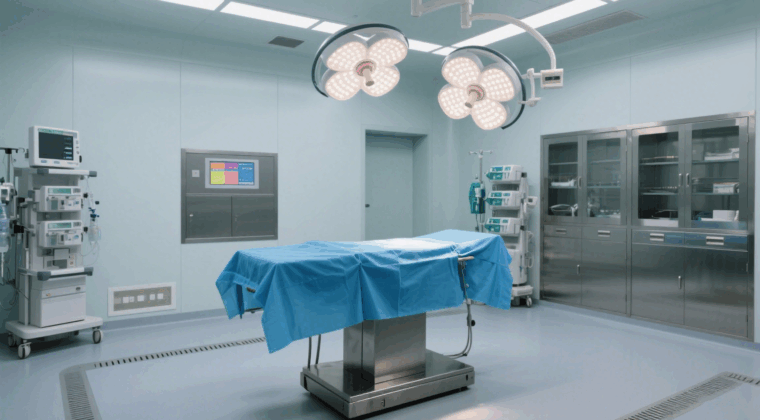
The acid and alkali resistance of cleanroom panels enables them to maintain structural stability and functional integrity in corrosive environments. Their core advantages lie in three aspects: adaptability to special industrial scenarios, reduced maintenance costs, and ensured environmental safety.
- Adaptability to Highly Corrosive Scenarios, Expanding Application Range
Resistant to industrial chemical environments, they can be directly used in chemical workshops, electroplating plants, laboratories, and other areas, resisting corrosion from acid and alkali solution splashes and the volatilization of acid and alkali gases, preventing premature damage to the panels.
Meeting specific production needs, in industries such as battery manufacturing and metal surface treatment that require contact with acid and alkali substances, acid and alkali resistant cleanroom panels can maintain the integrity of workshop walls and ceilings, without affecting the normal progress of production processes.
- Reduced Corrosion Damage, Lowering Long-Term Maintenance Costs
Extended service life: Compared to ordinary panels, acid and alkali resistant cleanroom panels are less prone to surface peeling, holes, and structural deformation due to corrosion, eliminating the need for frequent replacements and reducing direct material replacement costs.
- Reduced Maintenance Frequency: Eliminates the need for regular repainting, repairs, or partial replacement of corrosion marks, reducing time and costs associated with manual maintenance and preventing production downtime due to repairs.
- Enhanced Environmental Cleanliness and Safety, Preventing Secondary Pollution:
Prevents the penetration of harmful substances. Acid and alkali resistance prevents the formation of debris or powder after corrosion, and avoids the penetration of acids and alkalis into the material, thus maintaining workshop cleanliness. This is particularly suitable for corrosive environments with high purity requirements.
Reduces Safety Hazards: Prevents risks such as acid and alkali leaks and wall collapses caused by corrosion and damage to the materials, ensuring the safety of workshop operators and the stability of the production environment.