
I. Preventing Product Defects Caused by Micro-Contaminants
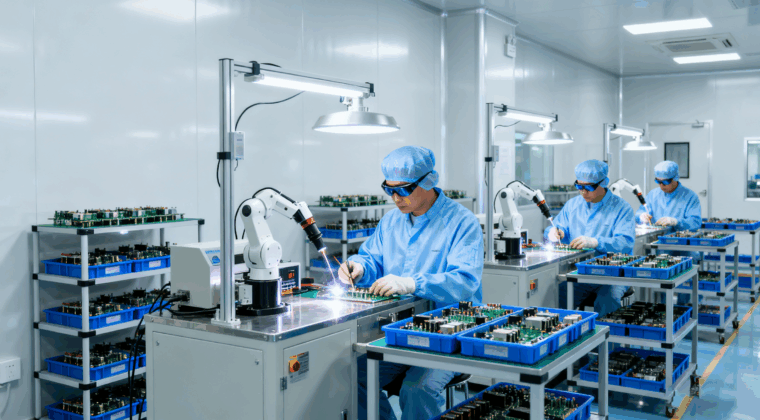
Core products in electronics and precision manufacturing (such as chips, integrated circuits, sensors, and optical components) are extremely sensitive to minute particulate matter (dust, fibers, microorganisms) in the environment:
Taking semiconductor chips as an example, their circuit linewidths have entered the nanometer scale (e.g., 5nm, 3nm). If dust particles with a diameter of only 0.1μm in the air adhere to the chip surface, it can cause short circuits and signal distortion, directly resulting in product defection. Pharmaceutical purification panels, with their smooth surface and few gaps, can minimize dust generation and accumulation. Combined with a cleanroom air conditioning system, the concentration of particulate matter in the workshop can be controlled at extremely low levels (e.g., in a Class 1 cleanroom, there are no more than 10 particles larger than 0.1μm per cubic meter of air).
If the surface of precision optical components (such as lenses and laser modules) is contaminated with dust, it will affect light transmittance or optical path accuracy, leading to a decline in equipment performance. The dustproof properties of pharmaceutical purification panels can reduce such risks at the source.
II. Anti-static Protection to Prevent Component Damage
Electronic components (especially semiconductors and integrated circuits) are extremely sensitive to static electricity. Electrostatic discharge (ESD) can instantly break down the internal structure of components, causing irreversible damage.
Ordinary building materials (such as wood and common boards) easily accumulate static electricity. Specialized anti-static pharmaceutical cleanroom panels, through the addition of conductive materials or surface treatment, can promptly conduct static electricity, keeping the electrostatic voltage in the workshop within a safe range (typically <100V), preventing component damage during production and assembly.
Furthermore, the overall sealing of pharmaceutical cleanroom panels reduces frictional static electricity generated by airflow, further reducing the risk of ESD.
III. Maintaining Environmental Stability and Ensuring Production Precision
Precision manufacturing processes have extremely high requirements for the stability of temperature, humidity, airflow, and air pressure. Pharmaceutical cleanroom panels are fundamental to creating a stable environment.
The thermal insulation and heat preservation properties of pharmaceutical cleanroom panels can be used in conjunction with air conditioning systems to control workshop temperature fluctuations within ±0.1℃ (such as in chip lithography workshops), preventing thermal expansion and contraction of components due to temperature changes, which could affect processing precision.
Its excellent airtightness ensures a slightly positive pressure in the workshop, preventing the infiltration of unpurified outside air. Simultaneously, through orderly airflow organization (such as vertical laminar flow), it promptly removes pollutants generated during production (such as welding fumes and volatile chemical substances).
IV. Improved Cleaning Efficiency and Reduced Maintenance Costs
Electronic workshops require regular cleaning and disinfection to maintain cleanliness. The characteristics of pharmaceutical-grade cleanroom panels significantly reduce maintenance difficulty:
The smooth surface is resistant to chemical corrosion (such as alcohol and disinfectants), making it difficult for stains to remain during cleaning, reducing the frequency of cleaning and labor costs.
The panels are tightly joined without dead corners, preventing bacteria growth or dust accumulation in ordinary wall gaps, reducing the risk of contamination due to incomplete cleaning.
V. Compliance with Industry Standards, Ensuring Compliant Production
The electronics and precision manufacturing industries have stringent international/domestic standards (such as ISO 14644 cleanroom standards and SEMI standards for the semiconductor industry). Pharmaceutical cleanroom panels are the fundamental material for meeting these standards:
For example, chip manufacturing workshops require a cleanliness level of Class 5 or higher, which ordinary building materials cannot meet. The performance of pharmaceutical cleanroom panels directly supports achieving cleanroom standards, ensuring that companies obtain industry certifications (such as ISO 14644-1 certification for semiconductor factories) and acquire production qualifications.
In summary, the technical characteristics of the electronics and precision manufacturing industries dictate their “zero tolerance” requirements for the environment. Pharmaceutical cleanroom panels, through their dustproof, anti-static, environmentally controlled, and easy-to-maintain properties, fundamentally solve core problems such as contaminant interference, component damage, and loss of precision control.