
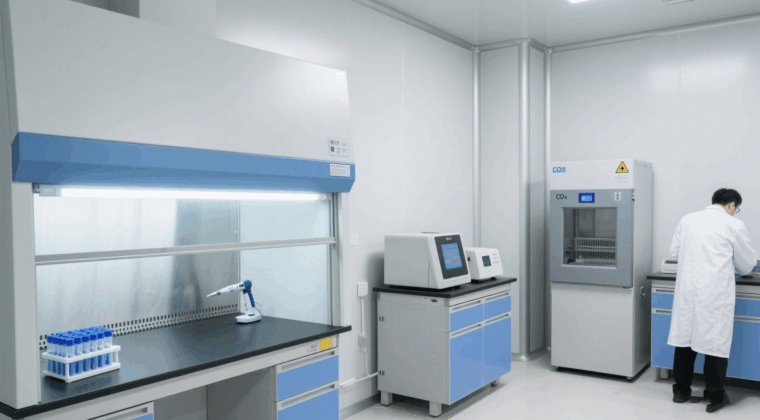
In fields with stringent environmental requirements, such as pharmaceutical production, electronics manufacturing, food processing, and biological laboratories, “cleanroom engineering” is a crucial link in ensuring product quality and experimental safety. Within this entire cleanroom engineering system, there is a seemingly ordinary yet indispensable material—the pharmaceutical cleanroom panel. It acts as the “invisible guardian” of the project, controlling the stability and reliability of the clean environment from the source. Today, we will delve into why the pharmaceutical cleanroom panel has become a “core component” of cleanroom engineering and what key role it plays in practical applications.
Before discussing pharmaceutical cleanroom panels, we must first clarify the core objectives of cleanroom engineering. “Environmental purification” is not simply “dust removal,” but rather the use of technical means to strictly control multiple indicators within the space, including particles, microorganisms, temperature, humidity, pressure, and airflow velocity, ensuring that the environment meets specific industry-specific national standards (such as GMP standards in the pharmaceutical industry and ISO 14644 standards in the electronics industry).
For example, in a vaccine production workshop, even a tiny bacterium in the air can cause an entire batch of vaccines to be scrapped; in a chip manufacturing workshop, a dust particle as small as 0.1 micrometers can damage delicate chip circuits. Pharmaceutical-grade cleanroom panels are the fundamental carrier for constructing such “high-cleanliness spaces”—they are not merely “building materials” for walls and ceilings, but also the “first line of defense” against pollutants and maintaining environmental stability.
Ordinary corrugated steel sheets and gypsum boards can also be used to build walls, so why are specialized pharmaceutical-grade cleanroom panels used in cleanroom projects? The answer lies in their “exclusive properties,” characteristics that precisely match the stringent requirements of cleanroom projects.
Cleanroom engineering, especially in the pharmaceutical and food industries, demands stringent control over microbial contamination. The surface texture of ordinary boards easily becomes a breeding ground for bacteria and pollutants.
Pharmaceutical cleanroom panels solve this problem at its source: their smooth, flat surface is easy to clean, and the addition of antibacterial agents inhibits microbial growth, minimizing dust and bacteria buildup that could become a source of contamination over time.
Data shows that pharmaceutical cleanroom panels achieve an antibacterial rate of over 99%, effectively reducing the risk of microbial contamination—an advantage that ordinary boards cannot match.
Particulate matter (such as dust, fibers, and metal shavings) is the “number one enemy” of cleanroom engineering in the electronics and semiconductor industries. One of the core advantages of pharmaceutical cleanroom panels is their ability to control particulate matter at both the “generation” and “propagation” stages:
- Dust-free: The surface material of pharmaceutical cleanroom panels has excellent wear resistance; even with prolonged wiping and impact, there will be no paint peeling or flaking.
- Dust-blocking: As the main component of walls and ceilings, pharmaceutical cleanroom panels form a dust barrier. A sealed cleanroom enclosure effectively blocks particles from entering the space while preventing the leakage of clean air, maintaining a positive (or negative) pressure environment – a crucial prerequisite for airflow organization in cleanroom engineering.
Cleanroom projects typically have a lifespan of 10-20 years, requiring building materials to possess… “Long-term stability.” Ordinary boards may experience deformation, corrosion, and aging over long-term use, compromising the airtightness of the clean environment. Pharmaceutical-grade cleanroom panels, however, offer superior performance, making them suitable for cleanroom projects:
- Deformation resistance: Pharmaceutical-grade cleanroom panels possess excellent compressive and bending resistance. Combined with a specialized keel installation structure, they effectively resist deformation caused by temperature changes and humidity fluctuations, ensuring long-term flatness of walls and ceilings.
- Corrosion resistance: For environments with corrosive gases, such as chemical and pharmaceutical industries, the surface material of pharmaceutical-grade cleanroom panels exhibits excellent corrosion resistance, preventing damage and extending the project’s lifespan.
- Fire resistance and flame retardancy: Meeting the fire safety requirements of different industries, both the surface material and the steel backing of pharmaceutical-grade cleanroom panels possess excellent fire resistance, ensuring cleanliness while also providing added fire safety protection for the project.