
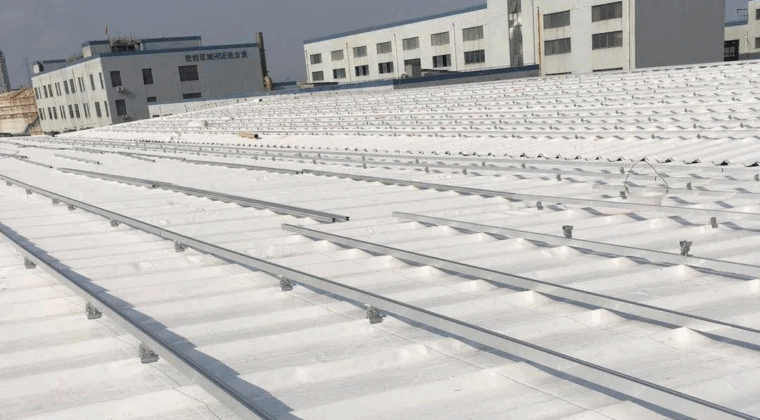
The roofs of livestock farms have very high requirements for waterproofing and corrosion resistance. The core reason is that the unique farming environment continuously generates highly corrosive substances, and the damp environment easily leads to leakage problems. Inadequate protection directly affects farming safety and operating costs. Fusion roofing tiles, with their dual properties of corrosion resistance and waterproofing, precisely solve these problems, providing livestock farms with long-term, stable roof protection.
I. The Core Reasons Why Livestock Farm Roofs Need Waterproofing and Corrosion Protection
The unique environment of livestock farms creates a “double erosion” effect on roofing materials, making both waterproofing and corrosion protection indispensable. This can be analyzed from the following three points:
The continuous generation of corrosive substances accelerates roof aging. Livestock farming processes generate large amounts of highly corrosive media, such as:
In livestock and poultry farming, the fermentation of manure releases acidic gases such as ammonia and hydrogen sulfide. Long-term contact gradually decomposes the surface structure of traditional roofing materials (such as ordinary corrugated steel sheets and cement tiles), leading to rust and cracking.
In aquaculture or high-humidity farming environments (such as hatcheries and brooding rooms), high levels of moisture in the air combine with farm wastewater (containing salt and organic matter) to form “corrosive moisture,” which seeps into roof gaps and causes internal corrosion.
If the roof lacks corrosion resistance, material damage will occur within 1-2 years, directly affecting the roof’s lifespan.
Leakage directly threatens the safety and profitability of aquaculture. Aquaculture farms have high requirements for environmental stability, and roof leaks can trigger a chain reaction of problems:
Leaks can lead to damp ground and mold growth in the farming area, increasing the risk of disease in livestock (such as pigs and chickens) (e.g., respiratory diseases, skin diseases), or affecting the stability of water quality in aquaculture.
If leaking rainwater drips onto aquaculture equipment (such as temperature control equipment and feeding systems), it may cause short circuits and disrupt the farming process.
In winter, leaks can also cause roof icing and freeze-thaw damage to the structure, further expanding the leakage area.
Frequent repairs disrupt the continuity of aquaculture and increase costs. If the roof’s waterproofing and corrosion resistance are insufficient, regular downtime for maintenance (such as replacing tiles and patching leaks) is required. Once the farm is shut down, the growth cycle of livestock and poultry is interrupted, and aquaculture organisms experience stress, resulting in direct economic losses. At the same time, the accumulated labor and material costs of repeated repairs significantly increase the operational burden of the farm.
II. Core Advantages of Using Corrosion-Resistant and Waterproof Fusion Roofing Sheets
The dual characteristics of fusion roofing sheets—corrosion resistance and waterproofing—perfectly match the environmental needs of livestock farms. The specific advantages can be summarized in four points:
Resisting Strong Corrosion, Extending Roof Life by 3-5 Times: Fusion roofing sheets are made of a special composite material (TPO/PVC waterproof membrane + high-quality steel plate), with a surface layer resistant to acids, alkalis, salt spray, and ammonia corrosion.
Faced with ammonia and hydrogen sulfide gases in livestock farms, surface peeling and internal corrosion will not occur.
Even in high-humidity environments with splashing wastewater, it can prevent moisture penetration and mold growth, avoiding roof cracking due to corrosion.
Compared to ordinary color steel sheets (lifespan 1-3 years) and cement sheets (lifespan 3-5 years), fusion roofing sheets have a lifespan of 15-25 years, significantly reducing the frequency of roof replacement.
Seamless waterproof structure eliminates leakage risks. The design of integrated roofing tiles typically features “interlocking joints” or a “comprehensive waterproof coating”:
Seamless joints prevent rainwater seepage caused by poorly fitted joints in traditional roofing tiles;
The tiles themselves are impermeable, preventing leakage even after prolonged rain or soaking, solving leakage problems at the source and ensuring a dry and stable farming environment.
Reduced maintenance frequency and lower operating costs. Due to the stable corrosion and waterproof performance of integrated roofing tiles, infrequent maintenance is almost unnecessary during their service life:
No need for regular cleaning, leak repair, or partial replacement, saving labor and material costs;
Avoids equipment damage and disease control costs caused by leaks, indirectly reducing economic losses;
No downtime for roof repairs ensures continuous farming operations and improves overall efficiency.
In addition to being corrosion-resistant and waterproof, integrated roofing tiles can also meet the specific functional needs of livestock farms:
Impact Resistance: Some integrated roofing tiles possess a certain degree of toughness, capable of withstanding feed handling and tool impacts, preventing tile breakage;
Heat Insulation: Some integrated roofing tiles have a built-in insulation layer, reducing heat absorption by the roof in summer, lowering energy consumption for air conditioning and ventilation equipment in the livestock area, and meeting the temperature control requirements of livestock farming;
Easy Cleaning: The smooth surface does not easily adhere to feces and dust, requiring only simple rinsing to maintain cleanliness, reducing the carriers of pathogens.
Summary
The waterproof and corrosion-resistant requirements for livestock farm roofs are essentially the core needs of “ensuring livestock safety, reducing operating costs, and maintaining process continuity.” Corrosion-resistant and waterproof integrated roofing tiles, with their characteristics of “corrosion resistance, leak prevention, long lifespan, and low maintenance,” solve the environmental pain points of livestock farms, making them a roofing material choice that balances practicality and economy.