
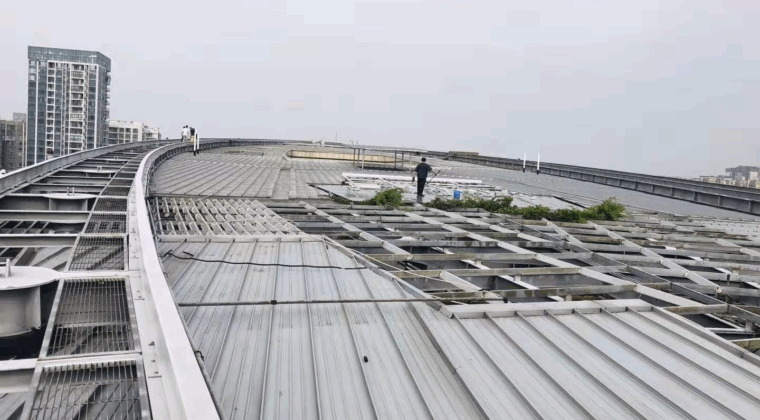
While waterproof shingles are not absolutely necessary for steel structure building roofs, they are crucial components in most applications, ensuring building functionality, extending structural lifespan, and reducing maintenance costs. Their necessity requires a comprehensive analysis from multiple dimensions, including the inherent characteristics of steel structure roofs, the functional value of waterproof shingles, and practical application pain points. Specifically, they can be broken down into the following core aspects:
I. Compensating for the “Inherent Waterproofing Shortcomings” of Steel Structure Roofs
The core load-bearing components of steel structure roofs (such as steel beams and purlins) are made of metal. Although they are strong and have large spans, they lack inherent waterproofing capabilities and have obvious “weak points” that require targeted solutions from waterproof shingles:
“Joint Leakage Risk” of Metal Sheets: Steel structure roofs are typically constructed using spliced metal sheets such as color steel plates and aluminum-magnesium-manganese plates. The overlaps and interlocking seams between these sheets are natural weak points in waterproofing. Relying solely on auxiliary waterproofing materials such as sealants and butyl tape makes the structure highly susceptible to leakage due to long-term exposure to temperature changes (metals have a high coefficient of thermal expansion and contraction, easily leading to joint deformation), UV aging (sealant cracking), and wind and rain impact (rainwater seepage pressure). Waterproof shingles, through a layered installation method, form a continuous waterproof barrier, directly covering the joints and blocking the seepage path at its source.
The “corrosion protection requirement” of metal structures: Steel (especially ordinary carbon steel) exposed to humid environments (such as rainwater, dew, and condensation) undergoes electrochemical corrosion, leading to weakened cross-sections and reduced strength, potentially causing structural safety hazards in severe cases. Waterproof shingles not only prevent rainwater from directly contacting steel purlins and beams but also reduce condensation inside the roof through roof ventilation design (some waterproof shingles have built-in ventilation layers), indirectly protecting the steel structure from corrosion and extending its service life (typically extending the maintenance cycle of steel structure roofs from 3-5 years to 10-20 years).
Waterproofing compatibility for complex roof details: Steel structure roofs often involve complex details such as skylights, vents, pipe penetrations, roof corners, and parapet walls. Waterproofing these areas is far more challenging than in flat areas. Waterproof shingles (especially flexible and metal shingles) can be cut, bent, and fitted with matching accessories (such as flashing and waterproof membranes) to fit tightly to these complex details, preventing “localized leaks” caused by improper detail treatment (which account for over 60% of leaks in steel structure roofs).