
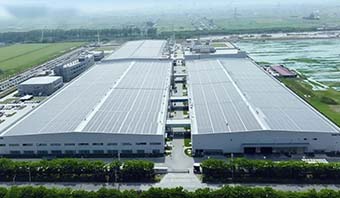
Steel structure factories have become the “top trend” in the industrial field due to their light weight, large span and fast construction. However, it also has its vulnerabilities:
Metal roofs are susceptible to corrosion: Exposure to acid rain, salt spray, or exhaust from workshops (such as electroplating plants and chemical plants) can cause the metal layer to rust, shortening its lifespan.
Steel Structure Factory Renovation
Thermal Expansion and Contraction: Steel structures are temperature-sensitive, expanding in summer and contracting in winter. This can cause cracking in conventional roof tiles (cement roofs, color-coated steel roofs), leading to leaks.
High Energy Consumption: Metal roofs absorb heat strongly and have high thermal conductivity. Summer roof temperatures can be 10-15°C higher than the ambient temperature, placing significant pressure on air conditioners.
Repair Difficulty: The paint on traditional roof tiles (color-coated steel roofs, ordinary metal roofs) easily ages and rusts, causing leaks. Local repairs are impossible, requiring extensive roof tile replacement, disrupting normal factory operations.
High Hidden Costs: Conventional roof tiles typically have a lifespan of 8-10 years. Corrosion and leaks generally begin to develop within 10 years, requiring complete replacement of the entire roof, which is difficult and expensive.
Himei waterproof tiles provide a solution for steel roofs.
- Corrosion Resistance: Protect your roof with a protective shield, ensuring 25 years of rust-free operation.
Steel factories are most vulnerable to rust! The surface waterproofing membrane of TPO/PVC waterproof tiles is resistant to acid, alkali, and salt spray corrosion (can withstand pH 2-12), effectively isolating the metal roof from corrosive media. Furthermore, during production, we apply an additional high-weather-resistant anti-corrosion layer to both sides of the tiles, providing dual corrosion protection.
- Deformation Resistance: Expands and contracts with the steel structure, ensuring 25 years of crack resistance!
Steel structures are temperature-sensitive. In regions with large temperature fluctuations (such as the Northeast and Northwest), roofs are prone to cracking due to thermal expansion and contraction. TPO and PVC membranes have an elongation at break of over 500%, offering strong elasticity. They adapt to the expansion and contraction of metal roofs like a rubber band, eliminating cracking and leakage. The combination of steel plate and waterproof membrane combines strength and ductility, allowing for elastic expansion and contraction rather than plastic deformation under thermal stress. With a temperature tolerance range of -50°C to 120°C, it’s ideal for large-span steel structure factories.
- Energy Saving and Cooling: Save 15% in summer electricity, giving your factory the “air conditioning” it deserves!
White TPO/PVC membrane has a high solar reflectivity (>80%), reflecting over 80% of solar heat. Furthermore, a 1.8mm thick TPO/PVC membrane has a low thermal conductivity. Tested data shows that in summer, Himei waterproof tile roof temperatures are 8-12°C lower than ordinary color-coated steel tiles, directly reducing air conditioning and cooling energy consumption by 10%-15%. For energy-intensive factories (such as steel mills and foundries), this can save hundreds of thousands of yuan in electricity bills annually!
- Fire Safety: B1-grade flame retardancy provides added security for your factory!
Steel structure factories often store equipment and raw materials, so fire prevention is paramount. The TPO and PVC membrane base materials are inherently flame-retardant (B1 rating), and paired with a galvanized steel frame (Class A fireproof), they can slow the spread of even a localized fire, buying time for rescue efforts and complying with the “Code for Fire Protection Design of Buildings.”
- Weldability: Protecting the factory from leaks for 25 years
Himei waterproof tiles utilize hot-air welding, achieving a peel strength of over 9.0 N/mm after welding (common color-coated steel tiles tend to loosen after nailing). They seal tightly like a zipper, ensuring protection against water seepage even in heavy rain. In addition to joints, all leak-prone areas, such as screw fastenings, gutters, skylights, and parapets, are welded with waterproof membrane, ensuring a leak-free roof. Even if localized damage occurs later, simply weld over the damaged area with a new waterproof membrane of the same material, making repairs easy and eliminating hidden costs.
Steel structure factories require durability, cost savings, and peace of mind. TPO/PVC Himei waterproof tiles offer multiple advantages, including corrosion resistance, deformation resistance, energy efficiency, and fire resistance, addressing all these challenges. More than just a tile, they provide a long-term insurance policy for the factory—leaking and rust-free for 25 years, saving on electricity bills!