
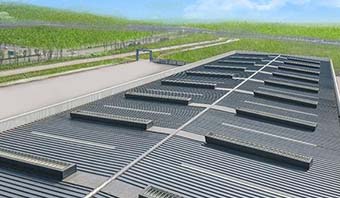
Farm roofs are exposed to high humidity, high ammonia levels, disinfectants, and corrosive environments caused by decomposing organic matter. This can easily lead to rust and degradation of traditional building materials (such as color-coated steel tiles), which can cause leaks, structural damage, and even impact animal health and production safety. Haimei waterproof tiles, through innovative materials and structural design, not only provide waterproofing but also offer over 20 years of corrosion protection.
I. The Necessity of Corrosion Prevention for Farm Roofs
- Highly Corrosive Environments Accelerate Material Aging
Farms are prone to the following long-term corrosion sources:
High Ammonia Environments: Decomposition of animal excrement produces ammonia, which combines with moisture to form an alkaline corrosive solution, attacking metal roof joints and nail holes.
Disinfectants and Cleaners: Frequent use of chlorine- and acid-containing disinfectants can chemically attack the color-coated steel coating, causing it to peel and rust through the base material.
High Temperature and Humidity: Hot and humid environments accelerate electrochemical corrosion of metals and promote the growth of microorganisms (such as mold), further damaging the material structure.
- Limitations of Traditional Materials
Metal color-coated steel plates: Cracks easily form at nail holes due to thermal expansion and contraction, and rust spreads when rainwater seeps in. The average lifespan is only 5–10 years.
Ordinary PVC tiles: The single-layer structure offers poor impact resistance, insufficient chemical resistance, and is prone to brittle cracking.
To address the issue of roof corrosion protection, Himei Metal’s waterproof tiles feature an anti-corrosion layer on both the front and back of the product, ensuring both waterproofness and excellent corrosion resistance.
The back-side anti-corrosion layer on Himei waterproof tiles primarily protects the bottom of the tile from moisture, mold, and corrosive gases, thereby ensuring the waterproofing of the entire roof. An excellent roof waterproofing system requires not only a high-quality waterproof layer but also a suitable anti-corrosion layer to ensure long-term effectiveness.
The back-side waterproof layer on Himei waterproof tiles comes in two types: a factory-installed basic anti-corrosion backcoat, which enhances the product’s corrosion resistance and is suitable for most common building roof environments.
The other type is a PVDP anti-corrosion membrane, which offers even stronger corrosion resistance and is suitable for roofs in harsher environments. This product provides an anti-corrosion solution for high-temperature, high-humidity, and highly corrosive environments, offering both waterproofing and corrosion resistance.
Common waterproof tiles on the market typically lack an anti-corrosion coating on the backside, leaving the steel plate completely exposed. This exposure to moisture and humidity can lead to corrosion and oxidation starting from the bottom, significantly reducing the product’s service life.
Some clients choose to add a barrier film during construction for corrosion protection, but this is more expensive.
Some waterproof tiles also add an ultra-thin TPO film on the backside for corrosion protection, but this is also more expensive and offers poorer corrosion resistance.
In addition to the backside, Himei waterproof tiles also have an anti-corrosion coating on the exposed wave solder joints. This coating protects the tiles from corrosion and damage, which is crucial for maintaining the long-term appearance and structural integrity of a building.
Common waterproof tiles on the market typically do not receive anti-corrosion treatment on exposed welds, leaving the seams susceptible to corrosion and rust from the bottom, shortening the product’s service life.
Himei waterproof tiles can provide excellent anti-corrosion and waterproof protection for the “three highs” corrosion environment of high humidity, high salt and high temperature. They can be used on the roofs of factories and buildings in chemical plants, pickling plants, farms, coastal areas, etc.