
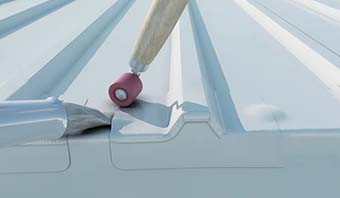
TPO waterproofing membrane is a sheet-like thermoplastic elastic waterproofing material made from thermoplastic polyolefin (TPO) resin. It exhibits excellent chemical stability and is resistant to corrosion from both acids and alkalis. Its molecular structure is relatively stable in both acidic and alkaline environments, making it less susceptible to chemical reactions that could degrade its performance and maintaining its waterproofing properties over time. TPO waterproofing membranes are clearly stated to be resistant to both acid and alkali corrosion, making them suitable for waterproofing projects such as industrial and civil roofing, underground waterproofing, and municipal infrastructure, where acids and alkalis are present.
What are the advantages of combining TPO waterproofing membrane with metal?
When combined with metal, TPO waterproofing membrane combines the flexible waterproofing properties of TPO with the rigid support of metal, resulting in excellent waterproofing, corrosion resistance, and structural strength. The following is a detailed description of its performance:
Excellent Waterproofing: TPO waterproofing membrane inherently possesses excellent waterproofing properties. When combined with metal, hot air welding creates high-strength welds between the TPO membranes. These welds are stronger than the parent material, completely covering all potential leaks in the roof, forming a continuous waterproof layer and effectively preventing localized leaks. Furthermore, the presence of the metal substrate provides stable support for the TPO membrane, reducing the risk of damage and leakage caused by deformation of the base layer.
Excellent Corrosion Resistance: The metal substrate is typically treated with an anti-corrosion treatment such as galvanizing. Combined with the chemical resistance of the TPO waterproofing membrane, the composite material is resistant to corrosion from corrosive substances such as acids, alkalis, and salt spray. For example, TPO fused tiles have a dense, impermeable TPO surface layer, while the metal substrate is coated with a high-barrier anti-corrosion layer, effectively extending their service life and maintaining long-term corrosion protection even in harsh environments. High Structural Strength: Metal inherently possesses high strength and rigidity. When combined with TPO waterproofing membrane, the overall tensile strength and puncture resistance of the material are significantly enhanced. This composite structure can withstand the effects of natural forces such as wind, rain, and snow, and adapt to the deformation of complex substrates, providing reliable protection for buildings.
Weatherproof: TPO’s stable molecular structure offers excellent weather resistance, resisting UV rays, ozone, and other harmful elements. Its performance remains unchanged in extreme temperatures ranging from -40°C to 120°C. When combined with metal, it maintains stable performance in long-term outdoor environments, resisting aging, cracking, or deformation, ensuring a long service life.
Excellent Thermal Insulation and Noise Reduction: TPO waterproofing membrane is a white elastomer material with a certain degree of thermal insulation, contributing to energy-saving buildings. Furthermore, when combined with metal, it can block sound transmission to a certain extent, reducing the impact of external noise on indoor spaces and enhancing the comfort of living or working environments.
Easy and Environmentally Friendly Installation: TPO waterproofing membrane is relatively lightweight, making it easy to handle and install, reducing labor costs. In addition, TPO materials are generally recyclable, which helps reduce construction waste and conforms to the principles of sustainable construction.